

Stress and the Yerkes-Dodson Law: Finding the Balance
We all experience stress whether it’s the pressure of deadlines, preparing for an exam, or personal responsibilities. While most of us see stress as harmful, but a certain level of stress can push us to perform better. It’s a natural response that prepares the body and mind to meet challenges. In other words, stress isn’t always the problem; it’s about finding the right balance. A healthy amount can drive growth, focus, and resilience, while excessive stress leads to burnout.
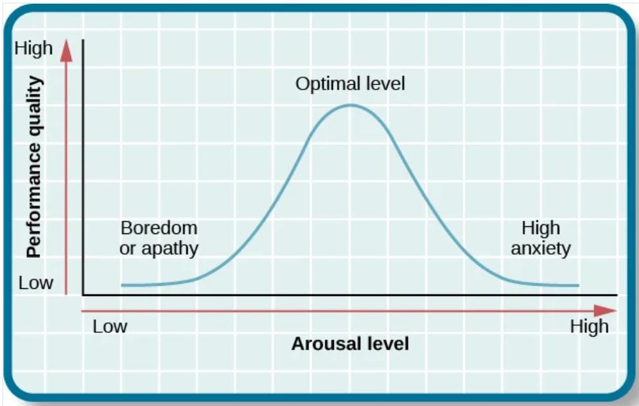
This is where the Yerkes-Dodson Law comes in. The Yerkes-Dodson Law (1908) describes the relationship between arousal (which includes stress) and performance. It suggests that performance increases with physiological or mental arousal, but only up to a point. Beyond this point, too much arousal leads to a decline in performance. Graphically, this relationship is often represented as an inverted U-shaped curve.
- Low Stress (Under-arousal): When stress is too low, motivation and focus also remain low. This may lead to procrastination, lack of effort, or disengagement. For example, if a student has no exam pressure at all, they may not study effectively.
- Moderate Stress (Optimal Arousal): At this level, stress acts as a motivator. It energizes, improves concentration, and enhances efficiency. This is the sweet spot where individuals often perform at their best. A moderate amount of exam pressure can encourage the student to prepare thoroughly and stay alert during the test.
- High Stress (Over-arousal): When stress exceeds the optimal point, it overwhelms the individual. Anxiety, tension, and mental fatigue reduces performance. The same student, if overloaded with pressure, may experience panic, forget what they studied, or perform poorly despite preparation.
To conclude, stress is not inherently “good” or “bad.” Instead, its effect depends on balance. A manageable amount of stress can boost performance, while excessive stress impairs it. The Yerkes-Dodson Law reminds us that the goal is not to eliminate stress but to regulate it by developing coping strategies, building resilience, and finding ways to stay within the optimal zone.